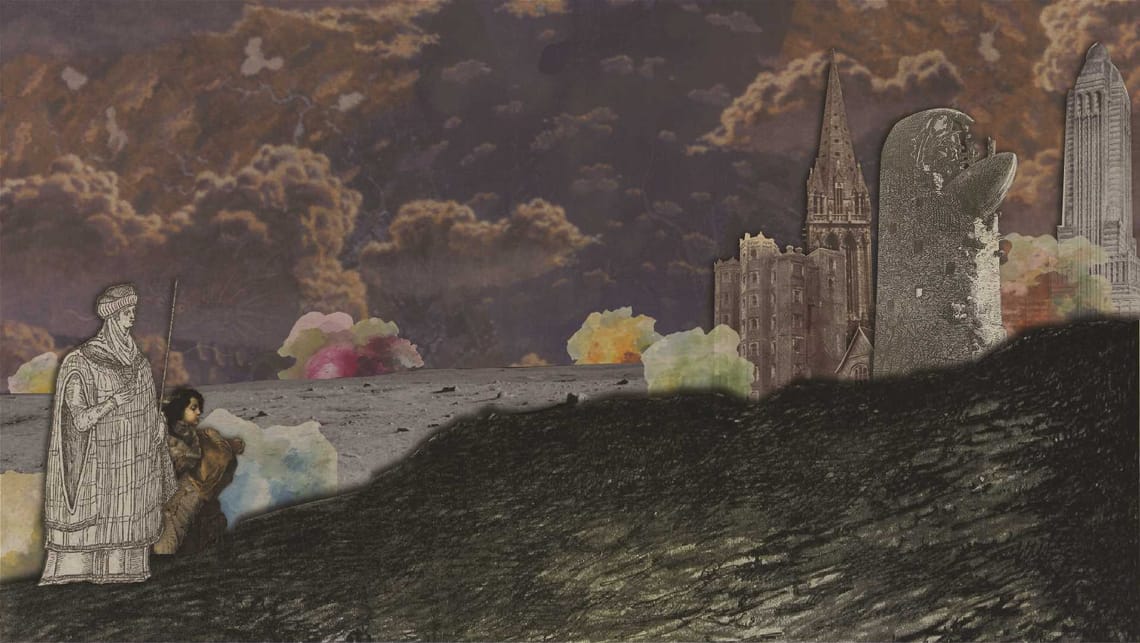
The Elephant in the Waiting Room is a science-fiction collection I co-edited and contributed to as a part of Baltan Laboratories. The publication contends with our attitude of complacency and catastrophizing as the world crumbles around us. Rather than focusing on the big, sexy apocalypse moment, the stories deal with the events leading up to and immediately following the disaster.
The 21st century presents itself as a certain sort of liminal space, a transitional state, existing in multiple conflicting truths simultaneously. In this space, we find that we have more voice than ever before, and yet no accompanying agency; where so much is happening every moment of every day, and yet nothing seems to change; where progression and regression merge meanings until near-indistinguishable.
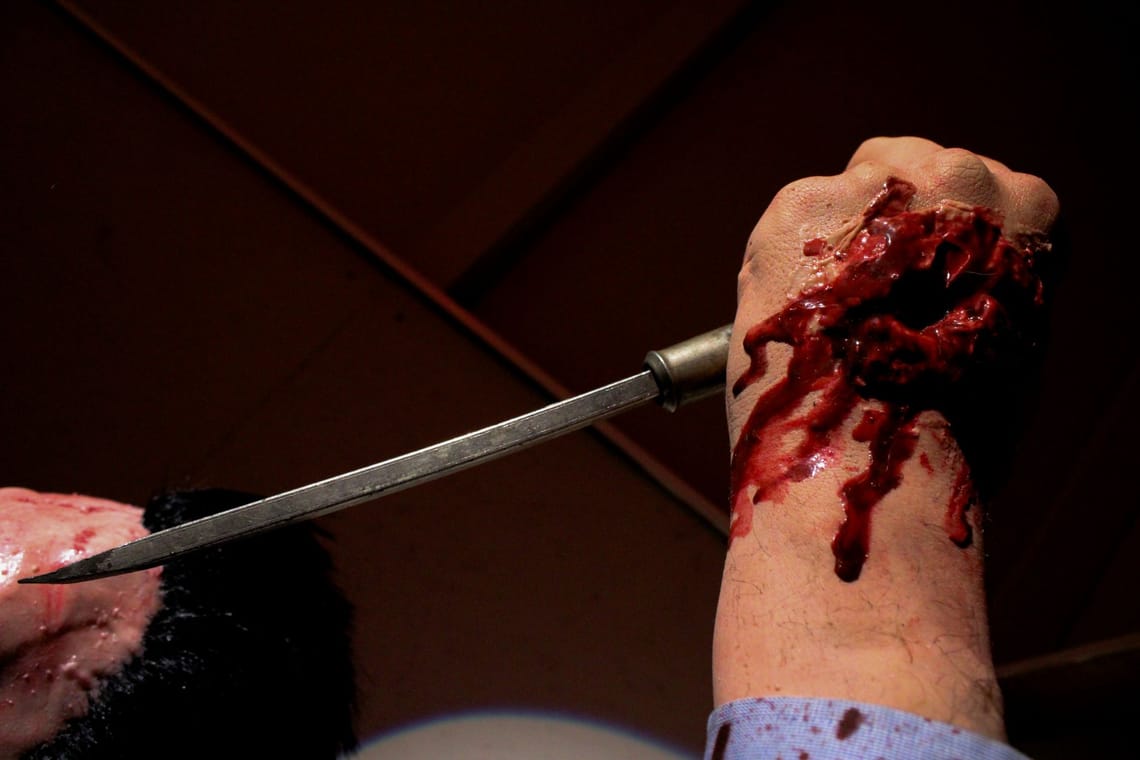
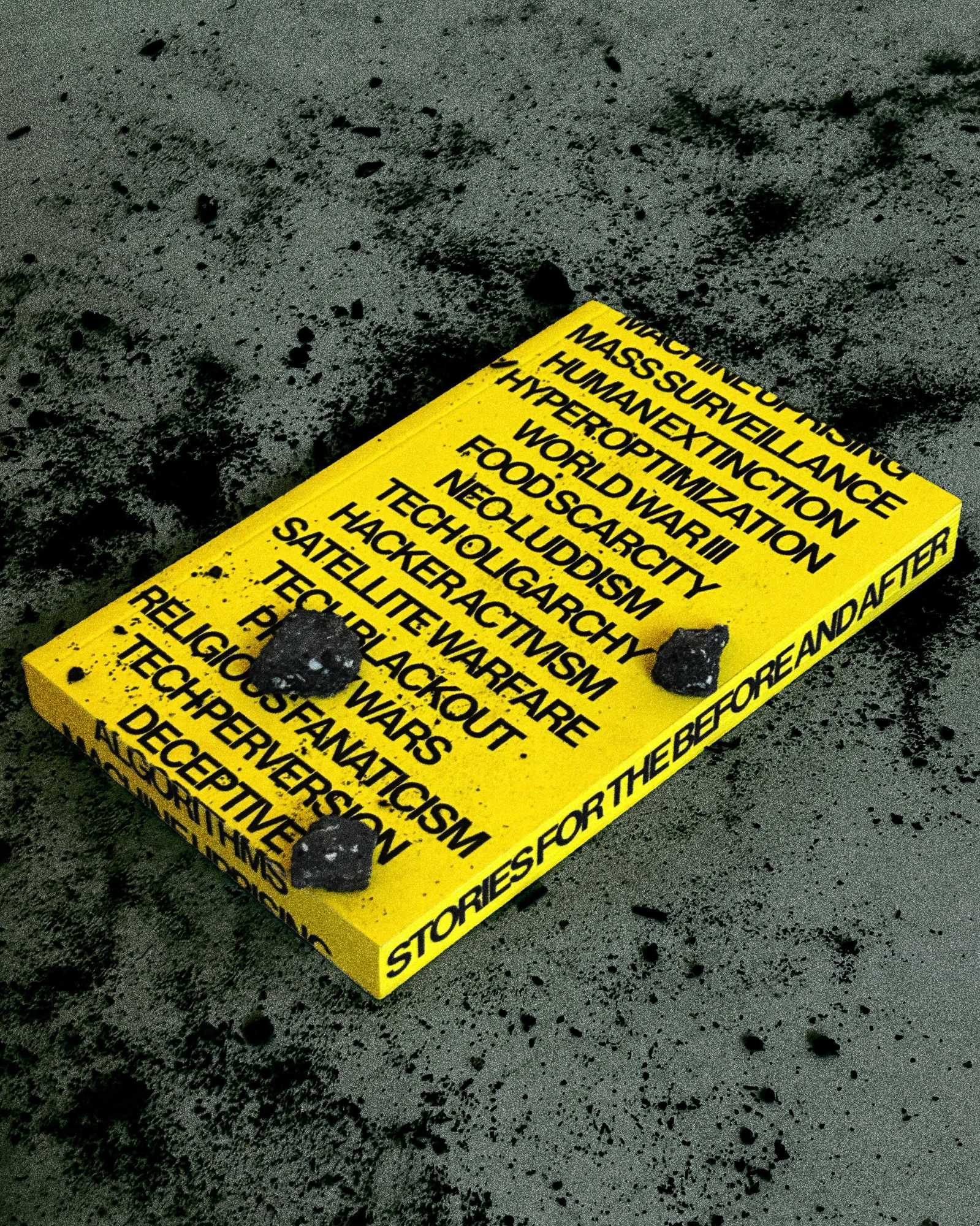
For this reason, Carosello Lab's cover design contains its most marketable catastrophes to the cover of the book, wrapping around and around in an infinite doomscroll. They remain there, on the surface, without overtaking the stories inside. This design, like the book itself reflects on a widespread trend in science fiction, which sees catastrophe pornography and its spectacularization as a source of entertainment. Our authors are not interested in the gory details of the events themselves, but rather in the myriad ways in which we influence them and are mutually influenced by them.
The Elephant in the Waiting Room brings together artists, writers and creatives across disciplines and nations and offers them the simple challenge of writing about near-future technological revolution. For better or for worse, tomorrow or in a hundred years. We asked our contributors to reflect on the moments and traits which define our current technological era, and rather than imagining its explosive climax, to instead imagine prologues and epilogues for a future we have yet to decide. Some are world-sweeping epics and some are slice-of-life vignettes, and yet across this broad spectrum our writers offer alternatives to the passive fear that permeates our day-to-day existence.
As creatives we have imagined enough disasters for a million worlds. We have ruminated on future wastelands, explosions and diseases. And yet, in spite of this, we so rarely go to the trouble of staying with these scenarios long enough that their most exciting moments fade into the background. Likewise, we don’t bother to check in on these worlds or their people before the bombs begin to fall.
The Elephant in the Waiting Room is a different kind of science-fiction proposing a different kind of revolution– one that is not so morbidly fixated on the death and destruction that so often comes as a side effect of change, but instead dwells on the people, places, and societies that lead to and continue on from those supposed ‘ends’.
We live in the waiting room. Waiting for war, for floods, for drought, for famine, for uprising, for downfall. What are we without the wait to define us?
Get a copy of The Elephant in the Waiting Room here
Book credits
A book by Baltan Laboratories
Editors: Lorenzo Gerbi; Benji Sheppard & Julia Kassyk
Contributing Writers: Ambra Stancampiano; Margaret Lamanna; Diego Orihuela Ibañez; Dewi Sofia; Miguel Parra; Yubin Jia; Riccardo Liberati; Marjolein Pijnappels; Julia Schneider; Benji Sheppard
Visual Identity and Book Design: Kim Costantino & CRSL.STUDIO
Printing: Navapress.com
Distribution: Lecturis; Idea Books
Kindly Supported by Creative Industries Fund NL and Stichting Cultuur Eindhoven as a part of Baltan's Technologies Otherwise year program
About Baltan Laboratories
Baltan Laboratories is a lab and development institution focused on talent development, learning, and research residencies. It explores the relationships between humans, non-humans and technology in the context of societal challenges. The lab embraces experimentation, encouraging curiosity and welcoming uncertainty, free from predefined outcomes or disciplinary constraints. In the tech ecosystem of Eindhoven, we offer a platform for debate around the societal effects of technology connecting to companies, cultural institutions, makerspaces, and academies in the region.